
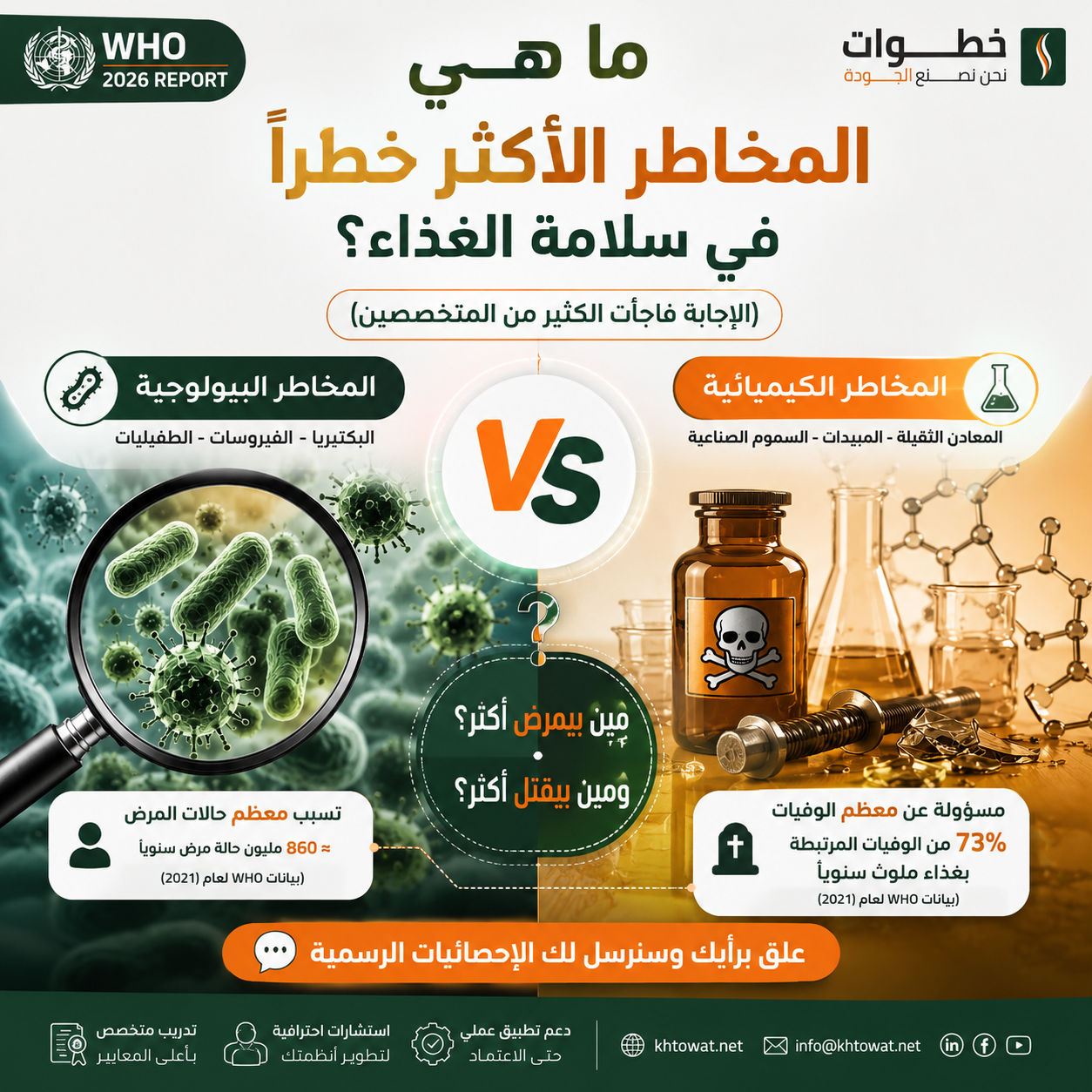
WHO Report 2026: Unsafe Food Causes 866 Million Illnesses Every Year – But Chemical Hazards Account for Most Deaths
Food safety remains one of the most important public health challenges worldwide. In June 2026, the World Health Organization (WHO) released new estimates revealing the enormous health and economic burden caused by unsafe food.
According to the report, contaminated food is responsible for approximately 866 million illnesses and 1.5 million deaths every year around the world. These findings highlight the critical role of food safety systems in protecting consumers and strengthening public health.
Foodborne Biological Hazards Cause Most Illnesses
The report shows that foodborne bacteria, viruses, and parasites were responsible for the majority of illnesses associated with unsafe food.
In 2021 alone, biological hazards caused an estimated 860 million cases of foodborne disease, including acute gastroenteritis, diarrhea, and other foodborne infections.
Children under the age of five were identified as one of the most vulnerable groups. Although they represent only a small proportion of the global population, they account for nearly one-third of all foodborne diseases.
These findings reinforce the importance of controlling biological hazards throughout the food chain through effective sanitation, hygiene practices, temperature control, and food safety management systems.
The Unexpected Finding: Chemical Hazards Cause Most Deaths
While biological hazards account for most illnesses, the report revealed a surprising and important finding.
According to WHO estimates, chemical hazards were responsible for 73% of all deaths associated with contaminated food in 2021.
Lead and inorganic arsenic were identified as the most significant contributors due to their long-term effects on human health. Continuous exposure to these contaminants can increase the risk of cardiovascular diseases, neurological disorders, developmental problems, and several types of cancer.
WHO estimates that these chemical contaminants were linked to more than one million deaths in a single year.
Why Chemical Hazards Require Greater Attention
Unlike many biological hazards that often produce immediate symptoms, chemical contaminants can remain unnoticed for years.
Consumers may be exposed to hazardous chemicals through contaminated water, environmental pollution, industrial activities, agricultural practices, or contaminated raw materials.
Once substances such as lead, arsenic, or methylmercury enter the food chain, they are often extremely difficult—or even impossible—to remove completely.
This makes prevention and risk management essential components of any food safety strategy.
What Do These Findings Mean for Food Safety Professionals?
The report serves as a reminder that food safety professionals should not focus exclusively on biological hazards when conducting hazard analysis.
Effective food safety management requires a balanced evaluation of:
- Biological hazards
- Chemical hazards
- Physical hazards
Food businesses should continuously review their hazard analysis processes, supplier control programs, environmental monitoring activities, and verification systems to ensure emerging risks are properly addressed.
The findings also highlight the importance of using scientific data and evidence-based risk assessment when determining hazard severity and likelihood.
The Role of ISO 22000 and HACCP
Food safety management systems such as ISO 22000 and HACCP provide structured approaches for identifying, evaluating, and controlling food safety hazards.
These systems help organizations:
- Identify potential food safety risks
- Establish preventive controls
- Strengthen supplier management
- Improve monitoring and verification activities
- Support continual improvement
- Protect consumer health
As food supply chains become increasingly complex, implementing risk-based food safety systems is no longer optional—it is a business necessity.
Economic Impact of Unsafe Food
The consequences of unsafe food extend beyond public health.
WHO estimates that foodborne diseases resulted in approximately USD 310 billion in lost productivity during 2021 due to time away from work and reduced economic performance.
When adjusted for purchasing power differences between countries, the total economic burden rises to an estimated USD 647 billion annually.
These figures demonstrate that investing in food safety is not only a public health responsibility but also a sound economic decision.
Conclusion
The latest WHO estimates provide an important message for the global food industry.
Biological hazards remain the leading cause of foodborne illnesses, while chemical hazards account for the majority of deaths associated with contaminated food.
For food manufacturers, quality professionals, and food safety practitioners, these findings emphasize the need for comprehensive hazard analysis and robust food safety management systems capable of addressing both immediate and long-term risks.
Organizations that proactively manage food safety risks today will be better positioned to protect consumers, maintain compliance, and build long-term trust in the future.
Khtowat for Quality supports food businesses and professionals through specialized training, consulting, and implementation services in HACCP, ISO 22000, food safety, and quality management systems.







Leave a Comment