Course Schedule
About This Course
What You'll Learn
Requirements
They are expected to engage actively in the course, including attending sessions, participating in discussions, and completing assessments.
Basic skills such as attention to detail, willingness to learn, and the ability to apply concepts in practical food safety situations are essential for success.
Course Highlights
Your Instructor
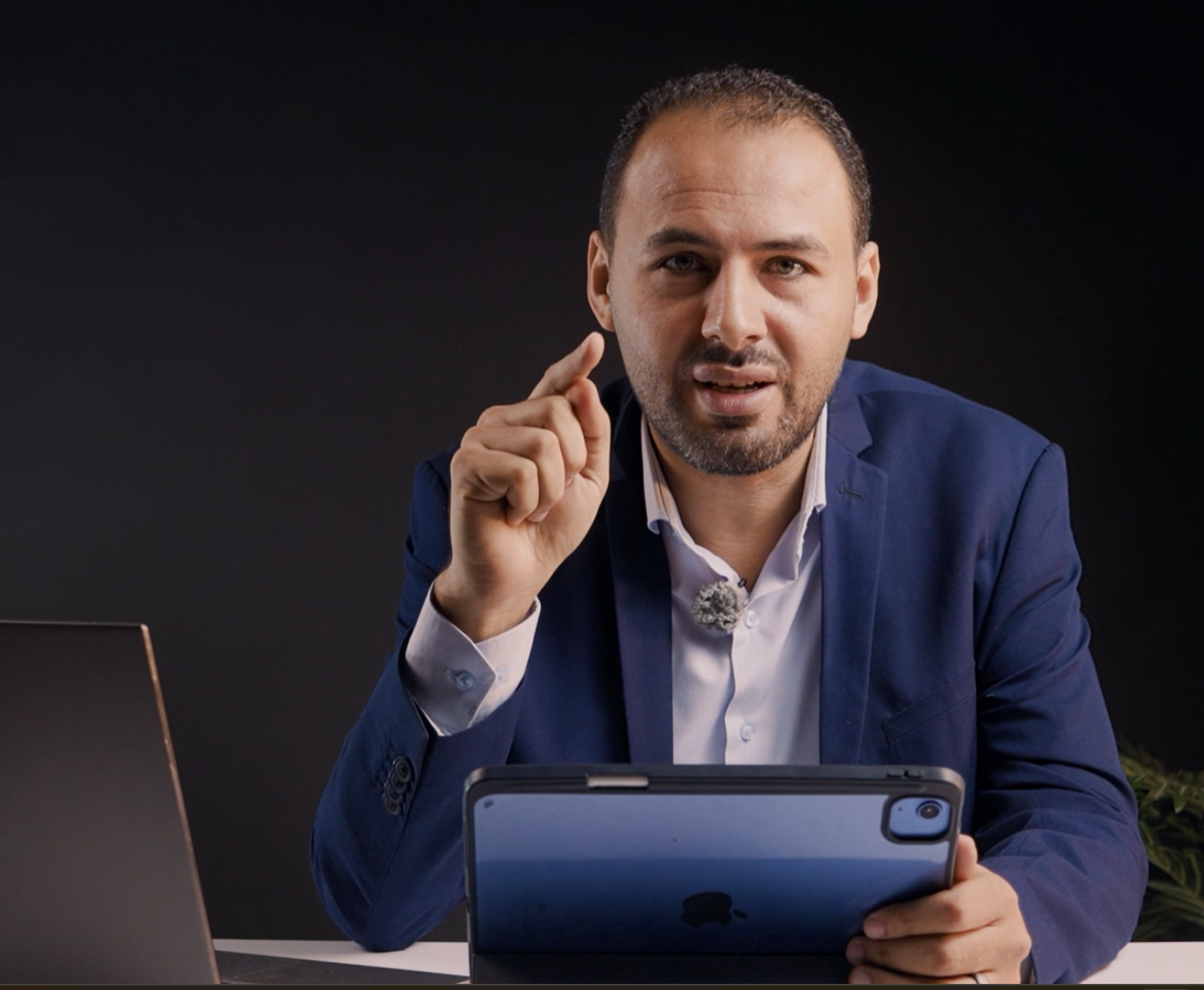
Dr Mohamed Hassan
Certified Expert Trainer
Experience in food safety and Quality for 15 years , Lead so many workshop and training sessions worldwide
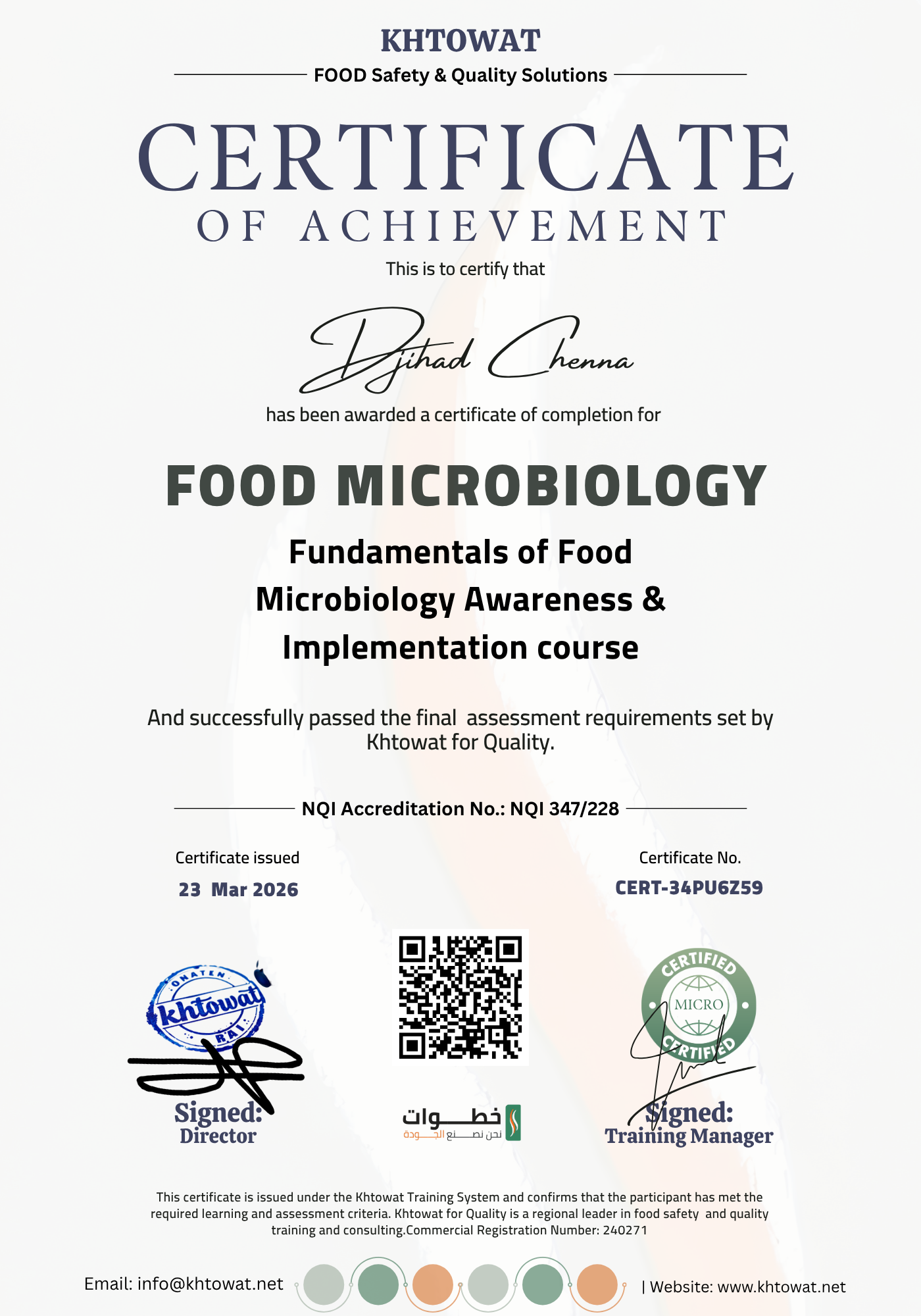
Certified Certificate
Get a certified certificate upon successful completion that you can share on LinkedIn and add to your CV
Frequently Asked Questions
After registration and payment, your enrollment will be confirmed, and you will receive the training details and instructions needed to join the course.
The course is suitable for food safety, quality, production, and laboratory personnel, students, fresh graduates, and anyone seeking to understand microbiology and its applications in the food industry.
No. The course starts with fundamental concepts and gradually progresses to food safety applications, so previous laboratory experience is not required.
Yes. The course presents microbiology from a practical perspective for food industry, food safety, and quality professionals rather than as purely academic microbiology.
Yes. The course covers major foodborne pathogens, their sources, associated foods, factors affecting their growth and survival, and methods used to control their risks.
Yes. You will learn sampling principles, appropriate sample handling, and the scientific basis of culture, enumeration, and detection methods used in food microbiology.
Yes. The course covers how to understand and interpret microbiological results, relate them to relevant criteria and potential risks, and make appropriate decisions.
Yes. You will learn the fundamentals of EMP, environmental monitoring objectives, hygiene zoning, sampling location selection, and how results can be used to evaluate the manufacturing environment.
The course combines scientific fundamentals with practical applications, including exercises involving pathogens, sampling, test results, EMP, and food safety decision-making.
Yes. Trainees receive a PDF Student Manual to review the concepts, applications, and topics covered during the training.
Is there an assessment or exam?
Yes. Upon meeting the program requirements, trainees receive a digitally verified certificate from Khtowat for Quality featuring a QR Code for online verification. Khtowat for Quality is licensed by the National Quality Institute (NQI) for Training, Consultation, and Qualification, with the relevant license details displayed on the certificate.
Yes. Your professional profile can display your certificates, courses, assessment results, training activities, and achievements and can be shared with others.
Yes. You can pay from outside Egypt. Your bank or payment provider will convert the amount and charge your card in its local currency according to the applicable exchange rate and fees.
Verified Trainee Reviews