
Is Having a Safe Final Product Enough to Prove That an Organization Implements Food Safety?
Imagine a food manufacturing facility producing thousands of food packages every day. It conducts microbiological and chemical tests on samples of its products and obtains results that comply with applicable specifications.
Does this necessarily mean that its products are safe?
The answer is: Not necessarily!
Food safety does not depend solely on the test results of the final product. It depends on the organization's ability to control all hazards that may affect food safety throughout production, handling, storage, and transportation, starting from the receipt of raw materials and continuing until the product reaches the consumer.
A tested sample may comply with specifications while problems still exist in equipment hygiene, storage temperatures, water quality, cross-contamination prevention, or supplier performance.
This is where the importance of having an integrated Food Safety Management System becomes clear, rather than relying on a collection of separate tests and procedures.
One of the most important international standards providing an integrated framework for this purpose is ISO 22000.
First: What Is ISO 22000?
ISO 22000 is an international standard that specifies the requirements for establishing, implementing, maintaining, and continually improving a Food Safety Management System (FSMS).
It is designed to help organizations operating at any stage of the food chain consistently ensure their ability to provide safe products and services.
What Makes ISO 22000 Different?
What distinguishes this standard is that it combines several management and technical elements that work together to establish an integrated food safety management framework. The most important include:
- Adapting to Changes: It helps organizations respond to internal and external changes that may affect their ability to achieve food safety objectives, including changes in processes, products, legislation, and market requirements.
- Compliance with Legal and Regulatory Requirements: It provides a framework that helps organizations identify relevant food safety laws and regulations, monitor compliance with them, and meet agreed customer requirements.
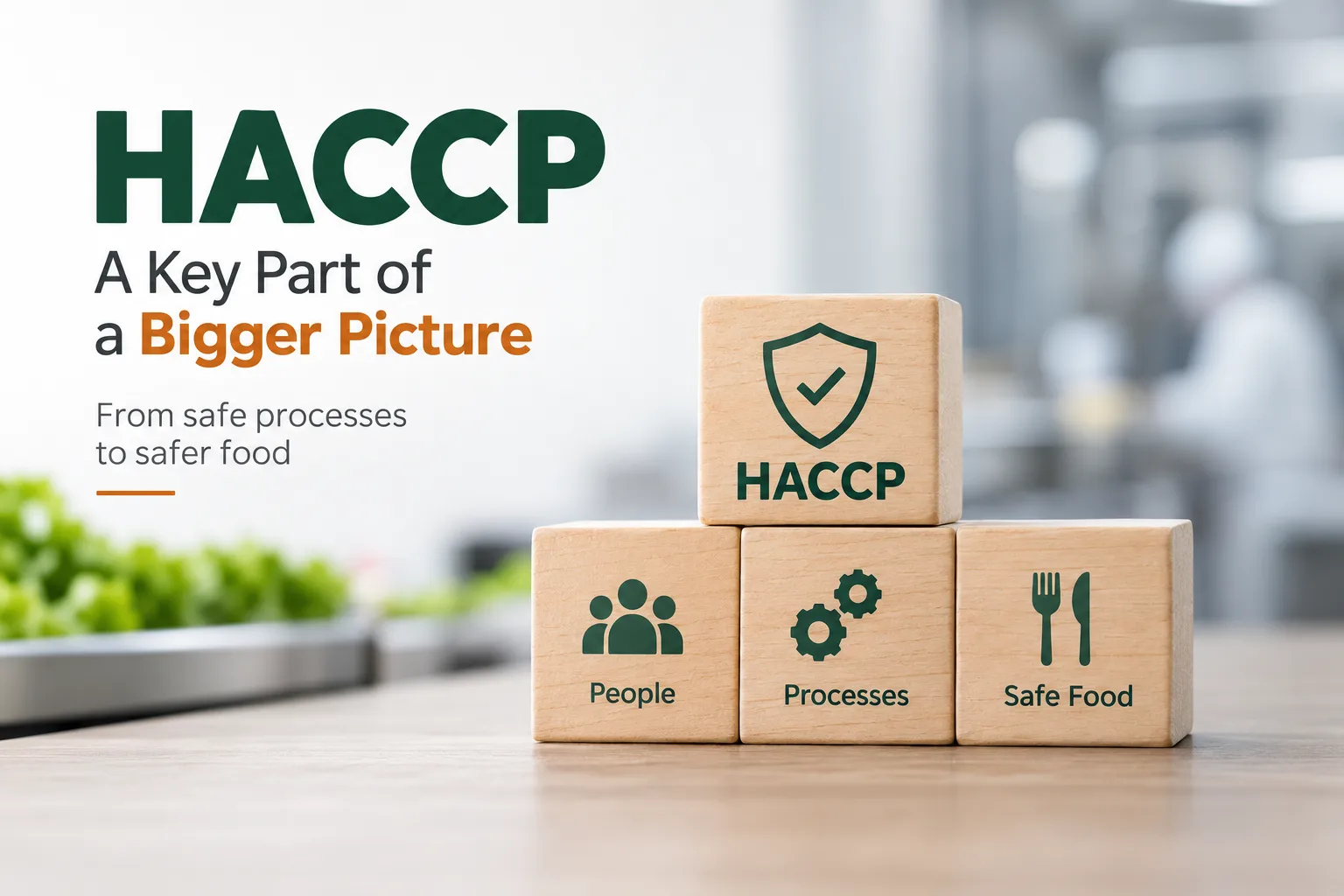
- Hazard Analysis and Critical Control Points (HACCP): It incorporates HACCP principles to identify and assess food safety hazards and establish appropriate control measures to prevent them or reduce them to acceptable levels.
- Prerequisite Programs (PRPs): It includes requirements for establishing a hygienic and suitable operating environment, such as cleaning and sanitation, pest control, maintenance, and cross-contamination prevention.
- Management and Defined Responsibilities: It connects food safety with top management commitment, clearly defined authorities and responsibilities, and the provision of the resources and competencies needed to implement and maintain the system.
- Effective Communication: It organizes internal communication between departments and teams, as well as external communication with suppliers, customers, regulatory authorities, and other relevant parties throughout the food chain.
- Continual Improvement: It helps organizations evaluate the performance of their food safety management system, identify weaknesses, and take the necessary actions to continually improve its effectiveness.
Therefore, ISO 22000 is not simply the implementation of HACCP. It is an integrated management and operational framework that ensures food safety risk management becomes part of the way the entire organization operates.
Second: Why Does Every Food Organization Need to Implement ISO 22000?
Some people believe that Food Safety Management Systems are intended only for large manufacturing facilities or companies exporting their products to international markets. However, this belief is incorrect.
Food safety risks are not determined by the size of an organization, but rather by the nature of its activities and the processes it carries out.
A small restaurant may face microbiological contamination risks. A food warehouse may face risks related to poor temperature control. A transportation company may cause product contamination due to unsuitable transportation conditions.
Therefore, the importance of ISO 22000 can be seen in several key areas:
1. Controlling Food Safety Hazards Before Problems Occur
One of the system's main objectives is to shift the focus from dealing with problems after they occur to preventing them in the first place.
Instead of waiting for non-compliant test results, the organization works to identify potential hazards, assess them, and establish appropriate control measures.
These hazards include:
- Biological hazards: Such as Salmonella, Listeria monocytogenes, and E. coli.
- Chemical hazards: Such as pesticide residues, cleaning agents, and chemical contaminants.
- Physical hazards: Such as metal, glass, and hard plastic.
- Food allergens: Which may cause serious allergic reactions in certain consumers.
The objective is to control these hazards throughout the different stages of operations, rather than relying solely on detecting them in the final product.
2. Implementing HACCP Principles Scientifically and Systematically
HACCP is one of the most important technical foundations of ISO 22000.
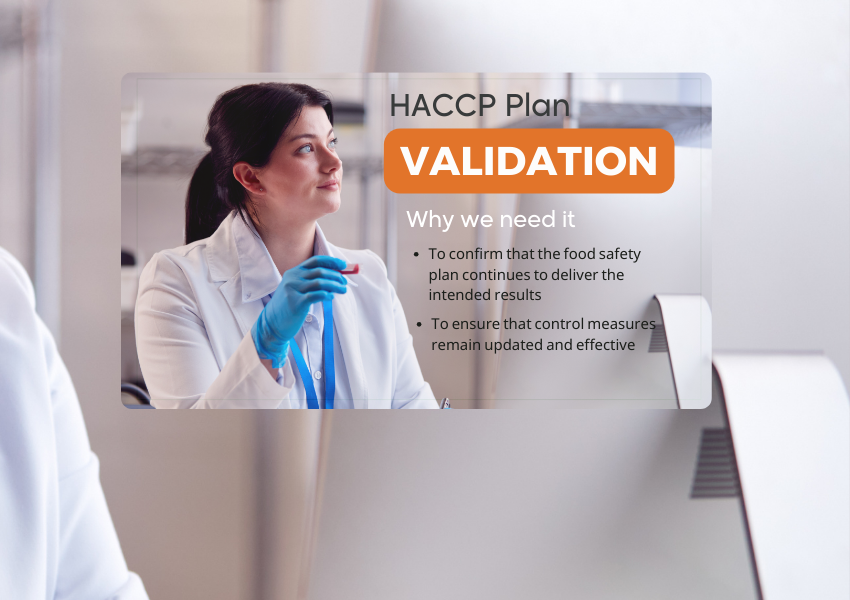
Through hazard analysis and the identification of Critical Control Points (CCPs), organizations can determine which process stages require specific control measures, establish critical limits, define monitoring methods and corrective actions, and verify the effectiveness of the system.
However, having a documented HACCP plan does not necessarily mean that an organization is implementing the system effectively.
The plan must be based on scientifically sound information and actual data about the product and processes. It must also be implemented, reviewed, and verified continuously to ensure its effectiveness.
3. Building a Production Environment That Prevents Contamination
HACCP cannot be implemented effectively without a suitable operating environment.
This is where Prerequisite Programs (PRPs) play an essential role. They include a range of basic practices and requirements, such as:
- Personal hygiene of employees.
- Cleaning and sanitizing equipment and surfaces.
- Pest control.
- Quality of water and air used in operations.
- Preventive maintenance of equipment and facilities.
- Waste management.
- Cross-contamination prevention.
- Control of raw materials and packaging materials.
These programs form the foundation upon which the HACCP system is built. Critical Control Points cannot compensate for the absence of basic hygienic practices.
4. Ensuring Traceability and Rapid Response to Problems
Imagine that microbiological contamination is detected in a product batch after it has been distributed to several customers.
Can the organization identify the raw materials used in that batch? Does it know which supplier provided them? Where were the products distributed? Can it determine the affected quantities and withdraw them from the market?
This is where the importance of a Traceability System becomes clear.
ISO 22000 helps organizations organize the information required to trace materials and products throughout the stages of the food chain and prepare for emergencies and unsafe product situations, including product withdrawal and recall when necessary.
Traceability is not simply about keeping batch numbers. It is about being able to access accurate information and make the right decision at the right time.
5. Making Food Safety the Responsibility of the Entire Organization
One common mistake is treating food safety as the sole responsibility of the Quality Manager or Quality Department.
But can the Quality Officer alone guarantee food safety if the Purchasing Department does not comply with supplier approval requirements? Or if the Production Department does not follow operating instructions? Or if the Maintenance Department fails to ensure that equipment is maintained in a hygienic condition?
Of course not.
ISO 22000 connects food safety with the management of the organization as a whole and emphasizes the importance of:
- Top management commitment and providing the necessary resources.
- Clearly defining responsibilities and authorities.
- Employee competence and continuous training.
- Communication between departments and teams.
- Monitoring system performance and reviewing its results.
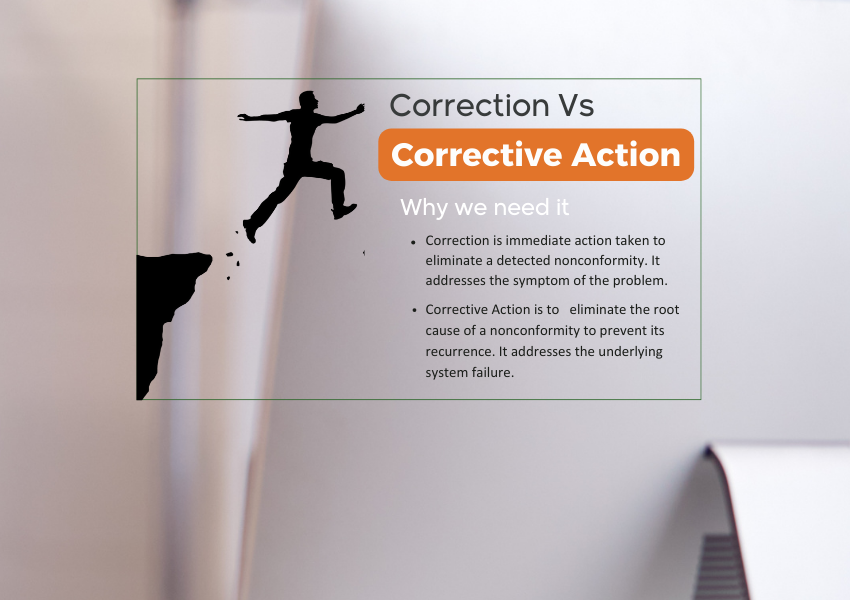
- Taking corrective actions and improving performance.
As a result, food safety becomes more than a set of instructions issued by the Quality Department. It becomes a shared working culture throughout the organization.
6. Improving the Ability to Meet Customer and Market Requirements
Today, many customers and buyers are no longer satisfied with simply asking about product specifications. They are increasingly interested in how products are manufactured and how effectively a company controls the risks associated with them.
An effective Food Safety Management System helps an organization to:
- Demonstrate its ability to manage food safety hazards.
- Organize supplier evaluation and approval processes.
- Meet customer food safety requirements.
- Improve opportunities to work with major companies and supply chains.
- Strengthen confidence among customers and relevant interested parties.
An ISO 22000 certificate may be a contractual requirement for certain customers or markets, even when certification is not legally mandatory.
Third: Is ISO 22000 Only for Food Manufacturing Facilities?
The answer is: No.
One of the major advantages of ISO 22000 is that it can be applied to organizations of different sizes and types of activities, whether they participate directly or indirectly in the food chain.
1. Farms and Primary Production
Controlling agricultural practices, irrigation water, pesticides, and the handling of animals and primary products.
2. Food Manufacturing Facilities
Including meat and poultry processing plants, dairy factories, bakeries, juice manufacturers, and frozen and canned food facilities.
3. Restaurants and Catering Services
Controlling the receipt of raw materials, storage, preparation, cooking, cooling, and serving.
4. Transportation, Storage, and Distribution Companies
Ensuring product safety during transportation and storage, controlling temperatures, and preventing contamination.
5. Packaging Companies and Suppliers of Production Materials
Controlling materials that may affect food safety, including food-contact packaging materials.
6. Retail Stores and Food Outlets
Controlling display, storage, and handling conditions, as well as product expiration dates.
This means that the size of an organization is not a barrier to implementing the system. The implementation approach can be adapted to suit the nature, size, and complexity of its activities.
Fourth: What Is the Difference Between HACCP and ISO 22000?
This is one of the most frequently asked questions among professionals working in food safety.
The difference can be explained simply:
| HACCP | ISO 22000 |
|---|---|
| A system based on hazard analysis and control. | An integrated Food Safety Management System. |
| Focuses on hazards associated with processes and products. | Covers management, operations, communication, and improvement. |
| Based on seven fundamental principles. | Integrates HACCP principles within management system requirements. |
| Requires supporting prerequisite programs. | Includes PRP requirements and system management requirements. |
Therefore, HACCP is not an alternative to ISO 22000. Rather, it is one of the most important technical components on which the standard is based.
Fifth: Does Obtaining ISO 22000 Certification Mean That Food Is 100% Safe?
It is important to understand this point clearly.
No system can absolutely guarantee the elimination of all food safety hazards. Similarly, obtaining a certificate does not mean that every product leaving the organization has been tested and proven safe.
Certification means that an independent conformity assessment body has evaluated the organization's Food Safety Management System and determined that it conforms to the requirements of the standard within the scope of certification.
However, the day-to-day responsibility for product safety remains with the organization itself.
That is why the real focus must be on the effective implementation of the system, rather than simply obtaining a certificate or preparing documents at the time of an audit.
Sixth: How Can an Organization Start Implementing ISO 22000?
Implementing the system does not begin with writing procedures and forms. It begins with understanding the organization, its activities, its processes, and its risks.
The implementation journey can be divided into the following main steps:
- Understand the Current Situation: Evaluate existing processes and capabilities, and identify gaps between current practices and system requirements.
- Secure Management Commitment: Define responsibilities and provide the resources required for implementation.
- Establish PRPs: Build hygienic and operational practices appropriate to the nature of the activity.
- Form a Food Safety Team: Select individuals with the necessary knowledge and experience of the products and processes.
- Conduct Hazard Analysis: Identify and assess biological, chemical, and physical hazards, as well as food allergens.
- Develop the HACCP Plan: Determine appropriate control measures and classify them according to the requirements of the standard.
- Implement Traceability and Control of Unsafe Products: Establish clear mechanisms for traceability, withdrawal, and recall.
- Training and Practical Implementation: Ensure that employees understand their responsibilities and are capable of carrying out the required procedures.
- Verification and Review: Conduct verification activities, internal audits, and management reviews.
- Continual Improvement: Address identified weaknesses and develop the system based on actual results and data.
It is important to emphasize that these steps are not simply a sequence for preparing documentation. They represent the process of building a system that operates every day within the organization.
Conclusion: Food Safety Is Not a Management Option That Can Be Postponed
The food that reaches consumers may pass through dozens of processes and hundreds of decisions before it arrives at their tables.
Every stage of these processes may present an opportunity for a hazard to arise and affect food safety.
Therefore, organizations should not wait for a problem to occur or for a food poisoning incident to happen before considering the establishment of a Food Safety Management System.
Implementing ISO 22000 is not merely a way to obtain a certificate or meet a customer's requirements. It is an investment in building an organization capable of understanding and controlling risks, protecting consumers, improving its operations, and strengthening market confidence in its products.
An organization that produces food is not only responsible for the quality of what it sells; it is also responsible for the safety of what reaches the consumer's table.
Would You Like to Develop Your Knowledge and Apply ISO 22000 in Practice?
Khtowat | Steps for Quality offers specialized training programs in Quality Management and Food Safety Systems, designed to help professionals in the food industry understand system requirements and translate them into practical applications within their organizations.
Learn the standard, understand its requirements, and gain practical experience in building a real management system—not simply memorizing the clauses of a standard.
Knowledge is Power – Keep Learning, Keep Leading.
Scientific References and Further Reading
- ISO 22000:2018 – Official Requirements for Food Safety Management Systems.
- ISO 22000 Explained – Guidance from ISO.
- ISO 22000:2018 – A Practical Guide.
- FSSC – What Is ISO 22000?.
Technical Note: The published reference is ISO 22000:2018, together with Amendment 1:2024, which addresses climate action. Revision work for a new edition is underway; therefore, organizations should monitor ISO updates before preparing implementation or audit documentation. ISO 22000 does not legally require every organization in every country to obtain certification. Applicable local legislation and customer requirements determine what is required of each organization.



Leave a Comment